Table of Contents
Olive Production Emerges as Key Agricultural Opportunity for Pakistan
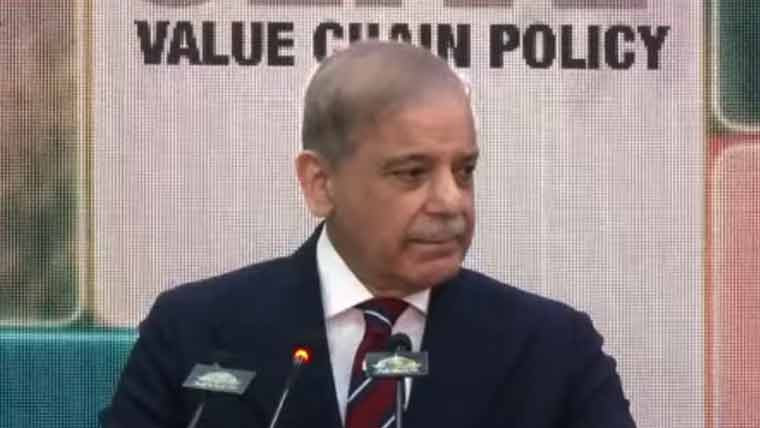
Olive Production in Pakistan has achieved significant progress in recent years, with Prime Minister Shehbaz Sharif praising farmers and agricultural experts for their efforts to develop the sector and announcing further government support for its expansion.
The prime minister made the remarks in Islamabad while attending the launch ceremony of the Pakistan National Olive Value Chain Policy, where he visited stalls displaying locally produced olive products and interacted with farmers and entrepreneurs from different parts of the country.
PM Shehbaz Praises Farmers
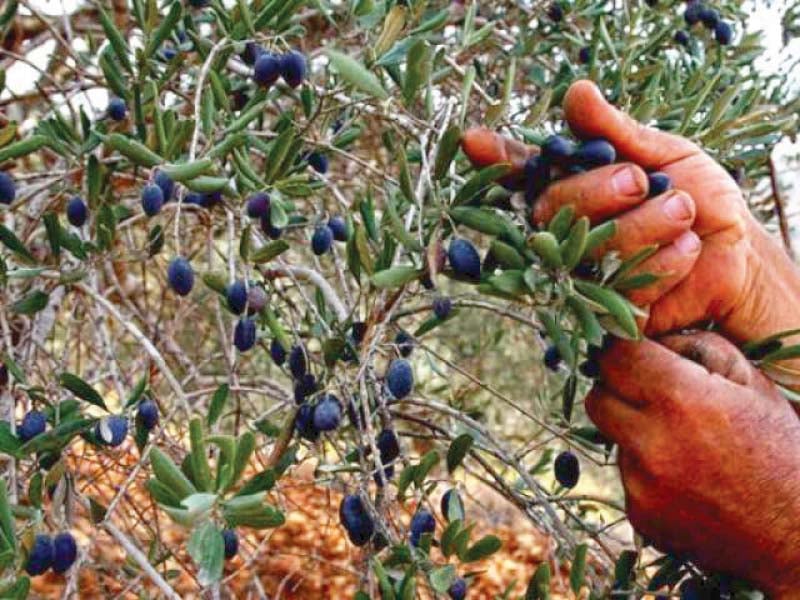
Addressing the ceremony, Shehbaz Sharif commended farmers whose efforts have helped establish olive cultivation as an emerging area of Pakistan’s agricultural economy.
He said the sustained work of farmers and agricultural experts demonstrated that determination, modern techniques and consistent effort could produce significant results.
The prime minister specifically appreciated the contributions of olive growers including Abdul Jabbar from Loralai, Qurrat-ul-Ain from Mardan and Yaqoob Izhar from Chakwal.
Shehbaz also thanked provincial governments for supporting initiatives aimed at expanding olive cultivation and said the federal government would continue providing assistance to farmers as part of its broader agricultural reform agenda.
Olive Production Policy Targets Value Addition
The newly launched policy is designed to strengthen Pakistan’s olive sector beyond cultivation by developing processing, marketing, quality standards and value-added products.
The government has increasingly identified olive cultivation as a potential avenue for reducing dependence on imported edible oils while creating employment and investment opportunities in rural areas.
Radio Pakistan reported that Pakistan currently imports edible oil worth billions of dollars annually, with the government aiming to increase domestic production and eventually move closer to self-sufficiency.
Earlier government planning has also identified commercial orchards, drip irrigation, rehabilitation of wild olive trees, improved processing and stakeholder training as key components of the sector’s expansion.
Pakistan’s Olive Sector Crosses Seven Million Trees
The scale of Pakistan’s olive development has expanded considerably.
According to the Ministry of National Food Security and Research, more than seven million olive trees have been cultivated across approximately 55,669 acres, with olive clusters developing in different parts of the country. The sector now includes extraction facilities, processing infrastructure, nurseries and quality-testing laboratories.
The government has also been working to develop a complete farm-to-market value chain, including modern extraction and processing facilities.
A proposed Phase III project aims to establish commercial, cluster-based olive orchards on 40,000 acres, install drip irrigation across 10,000 acres and rehabilitate approximately 300,000 wild olive trees through grafting.
Italy Strengthens Partnership With Pakistan
Italian cooperation has played an important role in the development of Pakistan’s olive sector.
Italian Ambassador Ugo Ciarlatani said the two countries have a longstanding partnership covering agriculture, science, education, trade and other areas. He highlighted Italy’s technical assistance and support for Pakistan’s olive value chain.
According to Radio Pakistan, Italy’s Olive Culture Project has supported laboratories, nurseries and business groups while providing training to more than 700 stakeholders.
The Italian Embassy has also reported continued cooperation through the Olive Culture Scale-Up Project, including work on agricultural resilience, certified laboratories and quality standards.
Pakistan Eyes Regional Olive Oil Markets
Federal Secretary for National Food Security and Research Aamir Ali Ahmed said the new policy aims to increase both olive production and exports.
Pakistan is seeking to move beyond traditional agricultural practices by adopting modern technology, improving processing capacity and developing internationally competitive products.
The government has also been pursuing greater international engagement in the sector. Pakistan became a permanent member of the International Olive Council in 2026, with officials highlighting the country’s expanding olive plantations and farm-to-fork infrastructure.
For Pakistan, the challenge now is to convert growing plantation numbers into commercially viable production, consistent quality and export-ready olive oil.
With continued investment in irrigation, processing, research, farmer training and value addition, the olive sector could become an increasingly important contributor to agricultural diversification, rural incomes and foreign-exchange earnings.See More on Pulse Pakistan